For more than 50 years, a one-of-a-kind residency program in Ohio has prepared doctors for a unique challenge: caring for children wherever military service takes them.
Through a partnership between Dayton Children’s Hospital, Wright State University Boonshoft School of Medicine, and nearby Wright-Patterson Air Force Base, military and civilian pediatric residents train side by side, gaining experience they bring into hospitals and clinics around the globe.
“Whenever the military goes into a country, the first thing that happens is families bring in their children because they haven’t had access to any kind of care,” said Vicki Giambrone, a government relations consultant for the hospital. “Once you take care of somebody’s child, it builds a different kind of bond.”
Regardless of where they end up, the pediatricians carry with them the specialized expertise, mentorship, and connections formed during residency at Dayton Children’s.
Training for wherever the mission leads
Children’s hospitals have long served as training grounds for the pediatric workforce. But Dayton Children’s offers something unusual: military and civilian residents learning alongside each other at a freestanding children’s hospital and the Wright-Patterson Air Force Base Medical Center Pediatric Clinic.
The Integrated Pediatric Residency Program is the only program in the country to combine military and civilian training experiences while exposing residents to the breadth and complexity of pediatric care.
Residents rotate through both the children’s hospital and military settings and work directly with subspecialists, surgeons, and critical care physicians. They learn to stabilize critically ill children, manage complex conditions, and navigate situations that may someday arise in a military clinic half a world away.
Many of the military residents go on to practice in locations where specialized pediatric resources are scarce.
Ann Burke, MD, pediatrics residency program director, wants them to leave training with more than textbook knowledge. She ensures they receive hands-on experience and do more than watch their fellow clinicians or other trainees do the work.
“We all learn best by doing, and they’ve done it here,” Burke said. “Their robust clinical experience here really prepares our graduates to get out there and take great care of kids.”
The program’s size — 48 future pediatricians per year — also creates opportunities residents may not find elsewhere. Burke describes the program as large enough to provide broad clinical exposure but small enough for residents to work closely with faculty who offer individualized mentorship and career guidance.
From Dayton to beyond
The impact of the residency program becomes clear when graduates begin serving military families around the globe.
Within weeks of arriving at Aviano Air Force Base in Italy, one Dayton-trained pediatrician started caring for critically ill newborn triplets. It was an early test of the new physician’s training.
The base commander contacted Dayton Children’s to share appreciation for how well prepared the graduate was for practice.
It’s one of many stories that reinforce the program’s larger mission.
The graduates often become the front line of pediatric care for military-connected children stationed far from children’s hospitals.
Yet even after leaving Dayton, many remain connected to the hospital.
Military clinicians routinely reach back to Dayton Children’s colleagues for advice on complex cases. Giambrone said many graduates view Dayton Children’s as a built-in safety net.
“They can pick up the satellite phone and feel like they’ve got tertiary care advice right at their fingertips,” she said.
Additionally, military families frequently fly to Wright-Patterson Air Force Base because of its longstanding partnership with Dayton Children’s and the specialized services available there.
“We have families request to be stationed at Wright-Patterson Air Force Base because it is connected to our hospital,” Giambrone said. “We’ve had kids fly in from Guam; our residency program impacts kids from all over the world.”
Caring for kids builds trust
The program’s global reach represents something larger than workforce development.
Pediatric care plays a unique role in building relationships with families and communities.
Wherever military families are stationed, children become a bridge between clinicians and communities. Families needing care for a child may already be navigating some of their most vulnerable times. Compassionate pediatric care can build trust in ways few other interactions can.
For Burke and Giambrone, workforce development and community impact are closely linked. Every pediatrician trained through the residency program expands access to specialized care in another corner of the world.
Sustaining the pipeline
Programs like Dayton Children’s integrated residency require long-term investment.
Leaders there credit the Children’s Hospitals Graduate Medical Education (CHGME) program with helping maintain and grow the workforce pipeline.
This support is especially important as many communities continue to experience workforce shortages across pediatric primary care and subspecialties.
“We cannot expand the pediatric provider population to where it needs to be without more money,” Giambrone said. “Because so many children rely on Medicaid for their care, funding is critical for children's hospitals to provide world class care and build the pediatric care foundation we need for the future.”
The workforce behind the mission
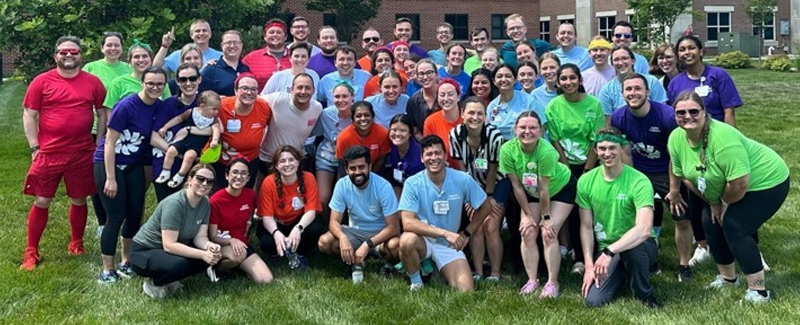
Today, generations of pediatricians who graduated from Dayton Children’s residency program can be found caring for children around the globe.
Some lead military hospitals. Others provide frontline pediatric care to military-connected children and families overseas. All of them continue to rely on the relationships and expertise they developed in Ohio.
And while their careers may take them thousands of miles away, the goal stays the same: Help ensure children and families have access to high-quality pediatric expertise no matter where they are.