"The cuts to Medicaid that we're grappling with probably mean that we lose lives over the coming years unless we can fix that."
Why the Pediatric Workforce Crisis Demands Federal Action
A congressional briefing highlighted how workforce shortages are threatening children’s access to care.

Children can’t be an afterthought in America’s health care system.
Pediatric workforce shortages, chronic underinvestment, and policy decisions affecting programs like Medicaid are putting kids’ access to care at risk.
This message was delivered during a July 15 congressional briefing hosted by the Children’s Hospital Association in conjunction with the bipartisan Children’s Health Care Caucus.
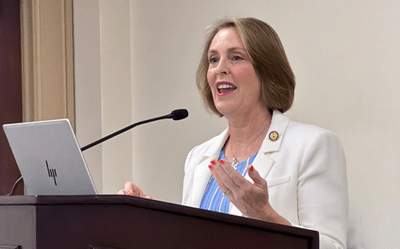
Representative Kathy Castor (D-Fla.) speaks at the workforce briefing.
The Association of Medical School Pediatric Department Chairs (AMSPDC), the American Academy of Pediatrics (AAP), and National Association of Nurse Practitioners (NAPNAP) sponsored the briefing. Speakers urged policymakers to better align federal policies with the realities of pediatric health care and strengthen the workforce kids and families rely on every day.
Representative Kathy Castor (D-Fla.), caucus co-chair, warned that decisions made in Washington can have profound consequences for children and families.
“A lot of policies that happen on Capitol Hill sometimes take a hatchet to kids,” Castor said. “The cuts to Medicaid that we’re grappling with probably mean that we lose lives over the coming years unless we can fix that.”
The growing shortage
Children represent nearly one-quarter of the U.S. population, yet pediatric care receives far less attention and investment than adult health care.
At the same time, clinical advances have helped more children with complex conditions survive and thrive, increasing demand for highly specialized pediatric providers.
Robert Vinci, MD, who co-leads AMSPDC's pediatrics workforce initiative, said workforce shortages today affect nearly every area of pediatrics.
“There are serious access issues in pediatrics,” Vinci said. “Workforce shortages affect nearly every pediatric subspecialty, with 11 pediatric subspecialties having less than one specialist per 100,000 children.”
When these shortages persist, kids and families feel the impact.
In some regions, children wait months to see a pediatric subspecialist. In others, families must travel long distances or cross state lines to access care. These delays can mean postponed diagnoses, interrupted treatment, and increased stress for children and caregivers alike.
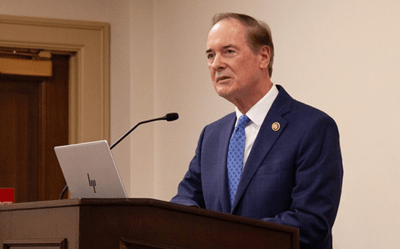
Representative John Joyce (R-Pa.) speaks at the July 15
congressional briefing.
Representative John Joyce (R-Pa.), co-chair of the Children’s Health Care Caucus, connected the issue to his own experience growing up in a rural community without access to pediatric subspecialists.
“There aren’t deserts just in rural communities for appropriate pediatric care. It occurs in inner cities as well,” Joyce said. “This workforce provides cutting-edge care that our pediatric patients in America deserve right now.”
The workforce pipeline is also shrinking. The percentage of medical school graduates entering pediatrics has significantly declined over the past decade as pediatric subspecialties receive less compensation than adult-focused fields despite requiring extensive training and education.
As a result, children’s hospitals are struggling to recruit and retain the pediatric subspecialists, mental health providers, child life specialists, and other experts needed to meet growing demand.
Children need specialized care
Children are not small adults.
Pediatric care requires specialized providers who understand the unique physical, developmental, and behavioral needs of infants, children, and adolescents.
Kristin Hittle Gigli, PhD, acute care nurse practitioner and nursing researcher, shared how mentorship and early exposure to pediatric care shaped her career. She said strengthening the pediatric nursing workforce means greater investment in clinical experiences and workforce development programs.
“Caring for kids requires specialized education and clinical preparation,” Gigli said. “Pediatric nurses have to be prepared to take care of kids of any age.”
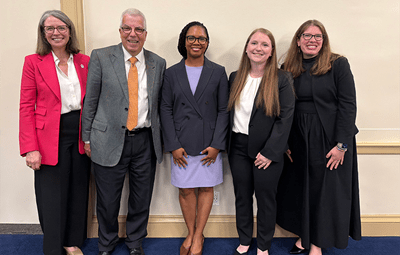
Leaders and experts in pediatric health care shared
how workforce shortages are putting kids' access to care at risk.
And the pediatric workforce extends beyond physicians and nurses.
Children's hospitals also rely on child life specialists, behavioral health professionals, therapists, and other psychosocial care providers who help children and families navigate illness, trauma, and loss.
Olivia Matthews, a certified child life specialist at Children’s National Hospital and a childhood cancer survivor, helps children understand diagnoses, prepare for procedures, manage anxiety, and maintain normal development during hospitalization.
“When policymakers discuss the health care workforce, I urge you to remember that caring for children requires more than treating disease,” she said. “It requires supporting the whole child and family.”
Matthews shared that child life interventions can reduce anxiety, decrease trauma symptoms, improve cooperation during procedures, increase treatment adherence, and support long-term coping throughout a child’s health care journey.
Yet many pediatric psychosocial services, including child life, music therapy, art therapy, and family support programs, are not reimbursed under most health care payment structures, forcing children’s hospitals to rely on operational budgets and philanthropy to sustain these services.
Why reimbursement matters
Workforce shortages cannot be separated from how pediatric care is financed.
Because nearly half of U.S. children are covered by Medicaid, reimbursement rates play a significant role in children’s hospitals’ ability to recruit, train, and retain the specialized workforce kids need.
Lee Beers, MD, AAP's chief medical officer, explained low Medicaid reimbursements for pediatric primary care and subspecialty services create significant financial strain for practices that provide prevention and early intervention services.
“Our health care system is built around volume and intensity of services and incentivizes billable encounters and procedures or lowering costs and not long-term health outcomes of individuals and communities,” Beers said.
Beers also noted that pediatric care is paid for differently than adult care. Because Medicaid historically reimburses at lower rates than Medicare and private insurance plans, pediatricians often earn less over their careers than physicians in adult-focused care. According to Beers, pediatricians’ lifetime earnings are about 25% lower than adult medicine physicians.
At the same time, physicians who complete additional years of training to become subspecialists do not receive higher pay, making it harder to attract clinicians to fields already facing significant shortages.
Vinci also emphasized the need to protect and strengthen Medicaid. He noted that on average, Medicaid pays about 72 cents on the dollar compared to Medicare.
“Investing in children’s health is not simply an expenditure; it is an investment with extraordinary returns,” he said. “Healthy children become healthier adults.”
Putting children first
Ensuring children have access to pediatric expertise should be a national priority.
Kids cannot continue to be an afterthought in health care policy. They require specialized providers, specialized training, and a workforce built around their unique needs and the needs of their family.
The pediatric workforce crisis is more than a staffing challenge. It is a system struggling to meet the needs of our nation’s children.
The decisions policymakers make now will shape children’s access to care for decades to come. The alternative is a future where more families face longer waits, greater travel distances, and fewer opportunities to receive care from pediatric experts.
As Beers reminded policymakers, “Children are 20% of the population and 100% of our future.”
The policies enacted today should ensure every child has access to the highest-quality care tomorrow.
Explore CHA’s pediatric workforce blueprint to learn more about the unique challenges facing the pediatric workforce and a guide to federal policy solutions.

Contact Us
For more information, connect with us.
Children's Hospital Association Blog
Find expert insights and perspectives on issues important to children's hospitals and child health on CHA's official blog.
Learn More