A nurse told Corey Feist, JD, that her manager regularly responded to concerns about burnout the same way: with information about the organization’s employee assistance program and other support resources.
But that flyer went in the trash.
“What I really need her to do is to listen to what’s getting between me and my patient and help me fix that,” the nurse told him.
For Feist, CEO and co-founder of the Dr. Lorna Breen Foundation, that conversation captures a lesson health care leaders need to understand about workforce well-being. While access to mental health resources remains important, real change requires organizations to address the operational and systemic factors that make it harder for clinicians to care for their patients.
Following the death by suicide of his sister-in-law and emergency physician Lorna Breen, Feist has become one of the nation’s leading advocates for advancing health care worker well-being and creating healthier work environments.
During the Children’s Hospital Association’s 2026 Annual Leadership Conference, Feist will explore organizational factors that contribute to burnout and actions leaders can take to build cultures where employees can thrive.
What separates organizations making meaningful progress on workforce well-being from those that continue to struggle?
Those who are getting furthest on this recognize it is an operationally driven and system redesign effort, much like quality improvement. In fact, we always espouse them to use similar resources and the infrastructure they already have in place to improve operations.
Their leaders incorporate workforce well-being into communications, involve their governance in planning and monitoring, and train leaders, including their frontline leaders, to identify and address the operational challenges getting between clinicians and their patients.
They have also codified this work in their key performance indicators. These organizations are further ahead than those still thinking about this as an individual resilience issue.
What stands out to you about the workforce challenges facing children’s hospitals and pediatric care teams?
It’s the rise in burnout of pediatricians over the past few years. I believe a lot of this is rooted in the increased administrative burden they’ve had to carry during the pandemic with the extra forms and tasks.
Another factor is the lack of additional mental health infrastructure for their patients. In many cases, pediatric behavioral health does not exist in communities, and therefore the pediatricians are being asked to be that specialist.
We need to understand that pediatrics is struggling as much as, if not more than, others.
What has changed most in how organizations approach workforce well-being, and where do the biggest challenges remain?
From a mental health perspective, we have now been able to make it safer for over 3.35 million health workers in the United States to access mental health care without fear of professional repercussions. Many hospitals and licensing boards have revised their approach to penalties for health workers getting mental health care.
We’ve also seen a start at operational changes in the day-to-day lives of health workers to reduce administrative burden. The primary driver of burnout is the administrative burden they increasingly carry, which was not on their shoulders 15 years ago, but is now theirs to solve.
The solution is not to ask our health care workers to be more resilient or give them individual resilience resources. The way to address that problem is to eliminate administrative burden in every possible domain.
Leaders need to understand that both operational and individual support need to come together to keep health workers thriving in their jobs taking care of patients.
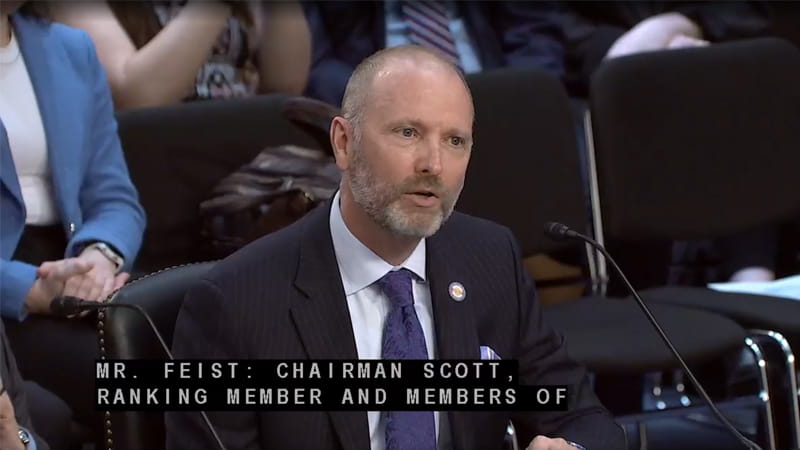
You helped lead the effort behind the Dr. Lorna Breen Health Care Provider Protection Act. What surprised you most about the response from policymakers and health care leaders?
When we met with policymakers and their staff in 2020 and 2021, the issues of mental health and well-being, turnover, recruitment and retention issues, which are all interrelated, were not something they were aware of. They were not hearing from their constituent hospitals and health care organizations about it very much.
At the time, they were incredibly empathetic and wanted to act. What surprised me was how bipartisan that was. We had strong support from the House and the Senate, and over 80 organizations came to support.
As we continue to do this work, we go back to these offices and they’re hearing so much more. Even in this challenging legislative environment, they’re receptive to action in a bipartisan way. This tells me there’s even more opportunity to go beyond the Dr. Lorna Breen Health Care Provider Protection Act and build upon this staircase of health policy.
What gives you hope about the future of the health care workforce?
Supporting the well-being and mental health of our health workers is well within reach of every health care leader in the country. I hope that leaders understand that it is part of the fabric of health care delivery.
But also, we’re hearing progress and stories where this conversation is in popular culture now, making a positive impact. Health care leaders, policymakers, and patients understand that health workers are human.
I know many people anchor to my sister-in-law’s story. The story of her death catalyzed a flood of people sharing their experiences with our family. Hearing those stories and seeing that impact of this work keeps us going.