A new onboarding model is helping nurse practitioners see patients up to four weeks sooner than traditional processes.
Akron Children’s Hospital’s Advanced Practice Provider (APP) Transition to Practice program trains newly graduated nurse practitioners immediately after passing their boards — shaving the time from job offer to full productivity.
And when patient access is a strategic priority, that time matters.
“Access is one of our biggest workforce pressures,” said Jenny Michel, DNP, director of the Advanced Practice Center. “The faster we can safely get providers to full productivity, the more patients we can serve.”
Challenging the model
Like many hospitals, Akron Children’s historically required APPs to wait until credentialing was complete before onboarding. That waiting period leaves new graduates stagnant, despite being eager to start their new positions.
“We were seeing a significant gap between when a position was needed and when a provider was fully functioning in that role,” Michel said. “Months could pass after hiring due to credentials and training. We knew we had to rethink the process.”
The Transition to Practice program eliminates the idle period. Instead of waiting months for privileges, participants shadow providers, rotate through subspecialty clinics, work closely with a dedicated preceptor, and learn systems and workflows.
Michel says the idea for early onboarding took shape after she attended a Children’s Hospital Association forum where peers shared similar workforce strategies. She collaborated across operations, primary care leadership, and advanced practice teams to design the new pathway.
Seeing patients sooner
Early program data shows improved patient access, reduced onboarding costs, and positive participant feedback.
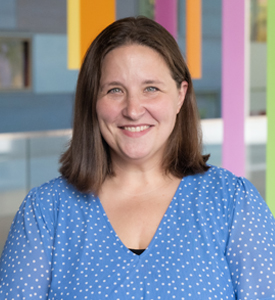
the APP Transition to Practice program.
The pilot initiative launched with an internal hire. Kate Root, initially a registered nurse, was the perfect candidate after earning her pediatric primary care nurse practitioner degree.
Root began shadowing and training immediately after passing her boards, reducing onboarding by four weeks and seeing patients nearly a month earlier than peers in the standard onboarding process.
She reached 75% capacity within two months and achieved full productivity within three months.
“Shadowing and training as soon as I passed my board exam allowed me to gain confidence and knowledge as opposed to having to continue in my RN role for months until the credentialing process was completed,” Root said.
Supporting recruitment and retention
For Akron Children’s, the benefits extended beyond time savings.
The program also strengthened recruitment.
“New graduates don’t want to sit months after passing their boards waiting to start,” Michel said. “There are many components of onboarding that don’t require privileges. It’s a lot easier and smoother to move them directly into this transitional role.”
And the initiative addressed a critical retention risk: the transition from graduate to independent practice.
Not only did Root get up-to-speed faster, but she also felt well-prepared for her new nurse practitioner role. She became familiar with systems and charting, had frequent check-ins with her preceptor, and shadowed in specialty departments such as adolescent medicine, pulmonology, and several others.
“I got advice on what could be managed in primary care and when I should refer to the specialty office,” Root said. “I made professional connections with other NPs throughout the organization. My preceptor ensured I wasn’t feeling too rushed or overwhelmed.”
Scaling the model
Following the pilot’s success, Akron Children’s leadership approved expanding the Transition to Practice program across primary care for internal APP hires. While adoption has taken time throughout the network, momentum continues to build.
“The ramp-up was even better than we expected,” Michel said. “What’s taken longer is spreading the model and helping leaders across regions understand how to implement it.”
Still, the long-term vision is clear.
“If this continues to demonstrate success, our hope is that this becomes our standard model — at least for internal employees,” Michel said. “Maybe we’ll get to a point where we can explore how this could work for external hires.”