The soul of a children’s hospital can only be understood through its people.
In his first year leading Children’s Mercy in Kansas City as President and CEO, Alejandro (Ale) Quiroga, MD, MBA, immersed himself in the people, purpose, and history of the 128-year-old institution.
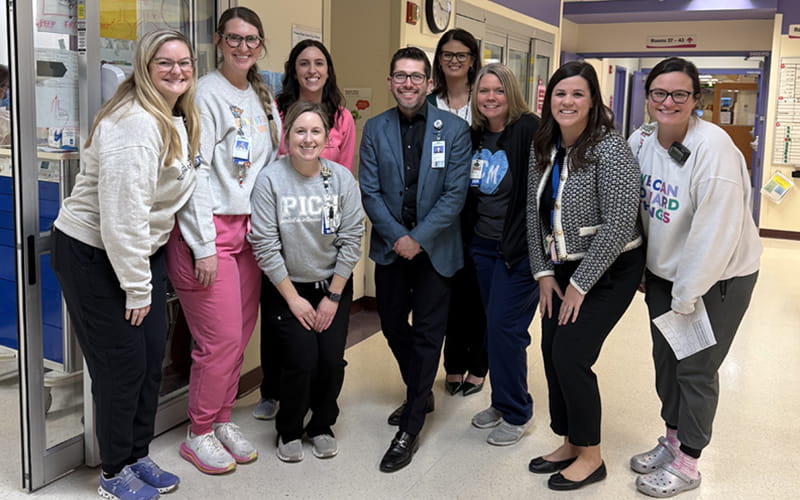
Quiroga set out to meet as many employees as possible in his first 90 days — a deliberate effort to connect with the 9,000 individuals who power Children’s Mercy across 16 locations and remote settings.
He found himself moved by the depth of purpose. The tenure of staff, the steadfast culture, and the quiet, innovative programs.
His observations, learnings, and reflections have established a weekly series of internal blogs and external LinkedIn posts. These posts are vulnerable and thoughtful and challenge traditional health care narratives to tell more human stories.
"Health care can and should be different. Our job as leaders is to make it better for those who give and receive care."
CHA asked Quiroga about his first year as CEO and why he believes leaders should use their platforms with intention and courage.
1. How was your first year at Children’s Mercy?
It was amazing; one year felt like three to five CEO years. The process of transitioning to a new leader can be traumatic for an organization. Being intentional mattered. We made the commitment to meet everybody, and it gave me a three-dimensional view of our soul and culture — what we value, our challenges, and what makes us proud. That inward year shaped the progress that followed.
2. How would you describe your leadership philosophy?
Growing in my leadership, I’ve always struggled when people talk about servant leadership. Not because I don’t like the concept, but because it did not sound genuine.
But leadership really is about serving people — the community and the people who care for them. Health care systems can be very corporate, but my job is to design systems that are sustainable and improve how we serve the community.
3. What is the purpose behind your weekly LinkedIn posts?
In health care, all too often we’re encouraged to benchmark to mediocracy and resign ourselves to the challenges.
A lot of what you read from health care CEOs focuses on financial pressures, and I don’t think that is the culture we need in this industry.
I wanted to be a CEO where we can prove corporate talk in health care does not help us think differently and reimagine the blogs through the lens of the community.
The posts began to answer the first questions people have about any new CEO: Who are you, and do you care? It was important to be transparent about showing myself in a genuine way that set the tone for the organization and what we’re doing. No corporate talk, no empty statements.
4. How intentional is the vulnerability of your posts and what is shared?
All week, I’m looking at how the organization is feeling, what story needs to be told, and what behavior should be highlighted. It’s both simple and terrifying. Some posts are reflective, and others are about people who have done something important.
The risk of the blogs is that it forces us to be congruent with what I’m saying. It’s the whole point of being vulnerable and why the blogs are different.
Some people tell me they feel like they know me, and that matters. When I’m grabbing a coffee or on the shuttle, employees have stopped me to comment or suggest topics. They have this blog where they can connect with me, and I love that.
5. If your posts stopped tomorrow, what do you hope they would leave behind?
I hope they leave a tone that reminds us our work is about people: our community, patients and families, and staff.
And outside of the organization, I hope they encourage leaders to not buy what we’ve been told: “This is it, and there’s nothing you can do about it.”
That’s not true. Health care can and should be different. Our job as leaders is to make it better for those who give and receive care.
6. What advice would you give to other children’s hospital leaders if they want to expand their LinkedIn presence?
Don’t post to say you were present or you rounded. You can talk about rounding, but that is not a high bar right now.
Tell a story. Share something with meaning, with an opinion, with an arc, with soul. Who did you meet? What was interesting about that person? How does that connect with the organizational context? Use your voice for a greater purpose.