Elijah’s treatment days used to begin long before sunrise.
He lives more than 200 miles from FMOL Health | Our Lady of the Lake Children's Hospital in Baton Rouge, Louisiana, and manages multiple complex medical conditions. Every other month, he and his family would make the trip to be seen by at least five different pediatric specialists and spend hours, if not days, at clinics.
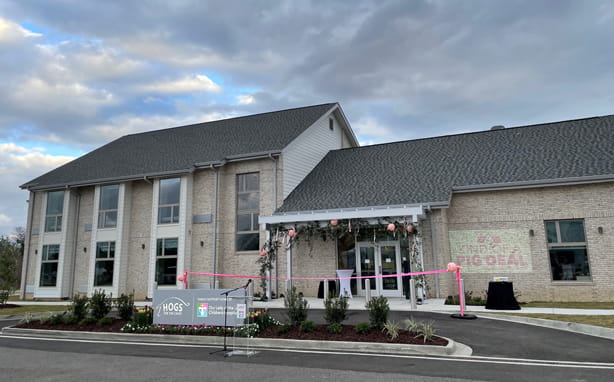
Now, instead of predawn drives and hours on the road, Elijah wakes up just minutes from the hospital. The Hogs for the Cause (“Hogs House”) family support home provides free, on-campus lodging for families traveling to Baton Rouge for their child’s medical care.
His family no longer has to set alarms at 3 a.m. to make it to appointments. They can focus on getting Elijah rested, calm, and ready rather than worrying about traffic, gas, and hotel costs.
“Transportation and lodging require a lot of logistics and more stress for families,” said Shaun Kemmerly, MD, chief medical officer at Our Lady of the Lake. “If we can take care of that, it helps them be more resilient and support their child in healing.”
A lifeline for rural families
Stories like Elijah’s are common at Our Lady of the Lake Children’s Hospital, a central pediatric health care hub serving families across Louisiana and surrounding states.
"We're going to keep treating children from a further distance as health care becomes more complex and pediatric specialists are harder to access."
For many families, advanced pediatric specialty care does not exist in their hometowns.
“Louisiana struggles with access to pediatric care, and we have a shortage of general pediatricians in rural areas, and pediatric specialists are very difficult to access for families,” Kemmerly said.
In the year after opening in February 2024, Hogs House welcomed 244 families, including 126 who returned for multiple stays. More than 3,920 nights of lodging have been provided, with an average stay of four days. Families have traveled from Louisiana, Mississippi, Texas, and as far as California and Massachusetts.
Keeping families close
Hogs House is in the hospital’s back parking lot — walking distance from clinics and treatment areas. It features 12 private rooms, a guest kitchen, laundry room, recreational areas, and a backyard.
For families with children in the PICU, NICU, or hematology/oncology unit, the home is a haven of comfort and support. It’s a place where parents can go to take their mind off their troubles and have a bit of respite.
“Families are reluctant to leave their children, but sometimes it’s beneficial,” Kemmerly said. “I think families realize that by getting some good sleep or taking a break, they can come back stronger for their child at the bedside.”
Wrapped in a warm hug
Some families arrive at Hogs House through referrals from those caring for their child — social workers, nurses, and physicians who recognize when distance and finances are a challenge.
“They’re talking to families who are in horrific situations and want to be able to offer something peaceful and meaningful to them,” Kemmerly said. “We may not be able to cure your child right now, but we can do this.”
Once families arrive at Hogs House, 24/7 on-site staff help connect families with hospital and community resources and offer steady emotional support during hard days.
“We know stress takes a toll on families,” Kemmerly said. “Our team members take the opportunity to wrap their arms around these families and love them while they are here.”
Support when it is needed most
Hogs House was made possible through a $2.25 million pledge from Hogs for the Cause and community contributions.
While Hogs House is unique to Baton Rouge, children’s hospitals across the country offer family housing as a critical extension of patient-centered care.
“We’re going to keep treating children from a further distance as health care becomes more complex and pediatric specialists are harder to access,” Kemmerly said. “It’s not going to get easier anytime soon.”