Supporting Caregivers Through Food Security
Children’s hospitals help families access food during and after their child’s care.

When a child is hospitalized or managing a chronic condition, their parents and caregivers are part of the care team. They stay at the bedside, manage medications, ask questions, and make decisions.
But too often, they’re doing it all on an empty stomach.
At Doernbecher Children’s Hospital at Oregon Health & Science University, a survey showed nearly two-thirds of caregivers were cutting back or skipping meals during their child’s stay.
Across the country, La Rabida Children’s Hospital in Chicago saw a related challenge during outpatient visits: families struggling to follow nutrition guidance and get healthy meals.
Food insecurity is one of the most pressing social drivers of health affecting children and families. Children’s hospitals understand improving community health starts with ensuring families have access to nutritious foods.
Meeting families where they are
At Doernbecher Children’s, the response started inside the hospital.
Teams across the organization — including nutrition services, nursing, social work, physicians, research and education — worked together to address food insecurity during inpatient stays and the transition home.
Staff created multiple access points for food distribution:
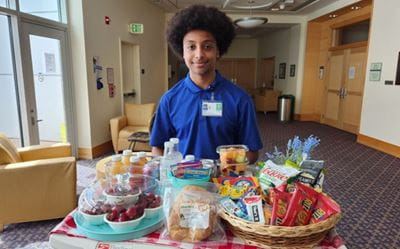
- Food pantries, stocked with ready-to-eat items, in family lounges on each unit
- “Dolly Trolley,” a mobile cart that brings snacks directly to patient rooms
- Meal trays for caregivers in the oncology unit so they don’t have to leave the unit
- Tokens to an onsite farmers market
Each element was designed with a specific barrier in mind — time, cost, or the inability to leave a child’s room — making it easier for caregivers to eat without stepping away.
Bringing food to clinical visits
At La Rabida Children’s, the work happens during outpatient visits.
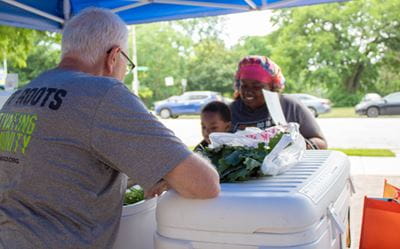
Photo credit: La Rabida Children's Hospital
Through a partnership with Just Roots Chicago, Fresh Food Farmacy comes to the pediatric clinic every other week to provide patients and their families with freshly harvested produce, along with nutrition guides, health and wellness classes, and more.
“The Fresh Food Farmacy meets families where they are and removes barriers to healthy living,” said Christina Linboom, director of inpatient case management and outpatient care coordination services and social work. “When fresh, nutritious food is easier to access, families can focus more on their child’s health and less on the challenges of putting healthy meals together.”
The program started in 2021 and offers families several ways to pick up their produce, including curbside and walk-up options.
They also host monthly cooking demonstrations to help kids and families understand how good nutrition leads to better health outcomes.
Support beyond the hospital
Both hospitals extend food security efforts beyond a single visit or admission.
Doernbecher Children’s offers families “groceries to go” bags, digital food cards through IQPay for produce and groceries, and home-delivered meals. A Food for Health Network enables families to order groceries online from 40 community pantries for home delivery, easing the transition home.
“I am currently unemployed, and paying for necessities has been a struggle,” one parent shared. “This service helped us fill a gap with a variety of quality foods without any stress over finances or transportation.”
La Rabida Children’s also works with community partners to connect families with ongoing food resources and support.
Designing for access
Children’s hospitals across the country are working to address the factors that shape health beyond clinical care.
Nutrition is one of the most immediate needs.
Doernbecher Children's.
The models at Doernbecher Children’s Hospital and La Rabida Children’s Hospital require coordination, but they create a more reliable system for children and families.
Since La Rabida’s Fresh Food Farmacy began, 805 families have learned about good nutrition habits and have received access to locally grown produce, setting children up for healthier outcomes. The hospital also established food pantries in the hospital for outpatient visitors and inpatient families, serving 6,545 adults and children last year.
In Portland, Oregon, thousands of food items have reached families through food pantries and the mobile cart, alongside expanded access to grocery programs and meal support.
But the more significant shift is how care is experienced. Children’s hospitals are embracing their role in improving community health by addressing the everyday challenges families face.
Because when caregivers don’t have to worry about their next meal, they can focus more fully on their child.
“When you have no money for food, this made taking care of the baby way less stressful,” one parent at Doernbecher said. “It was a blessing to be able to eat.”

Contact Us
Children's Hospital Association Blog
Find expert insights and perspectives on issues important to children's hospitals and child health on CHA's official blog.
Learn More